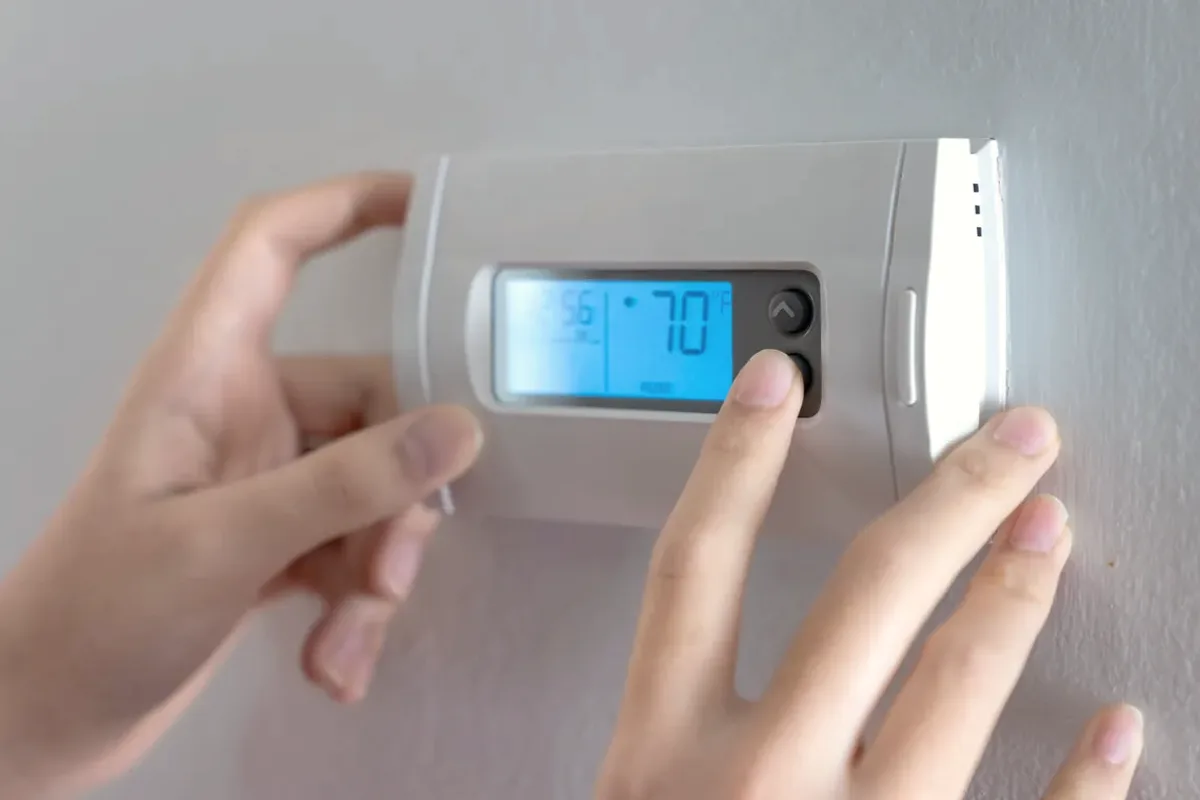
Request thermostat repair & replacement for a property in Newmarket. Include the equipment, the problem or planned work, and your location so the request can be reviewed.
How can a thermostat fault be distinguished from a problem in the HVAC equipment?
A thermostat that loses connection, reads an implausible temperature, or causes irregular cycling may have a device fault, a placement problem, or an issue elsewhere in the control circuit. Diagnosis should establish which equipment it controls and whether the system uses stages, a heat pump, or other compatible control requirements. Repair may address a connection or setting; replacement is a separate choice when the device is unsuitable or failing. Smart features also depend on wiring, network conditions, and system compatibility.
Record the thermostat model, displayed message, affected heating or cooling mode, and any recent wiring, network, or equipment changes. Assessment can compare temperature readings and placement with the system response, then check compatibility and control connections. Where symptoms point beyond the thermostat, the transformer, wiring, or equipment control board may need examination. This prevents a replacement decision based only on a symptom that could originate elsewhere.
Thermostat sensing, placement, and control-circuit diagnosis
Smart and programmable thermostat compatibility
Configuration for staged furnaces and heat pumps
Assessment and Scope
Questions for the Proposed Work
01
Trace symptoms before replacing the device
A blank display, incorrect reading, or short cycling does not by itself prove the thermostat has failed. Temperature placement near sunlight, a cold window, or a supply outlet can affect the reading, while wiring or equipment controls may also be involved. Internal electrical checks are not homeowner tasks. Comparing thermostat commands with the equipment's response helps identify whether repair belongs at the device, its connection, or the HVAC system.
02
Check compatibility before choosing an upgrade
A replacement should match the controlled equipment and its wiring, including two-stage furnaces or heat-pump functions where present. Programmable and smart models differ in schedules, remote access, and supported control terminals. A network connection problem may call for configuration or connection diagnosis rather than a new thermostat. Confirming model compatibility and the control functions actually needed avoids selecting features that cannot operate the connected system.
03
Verify setup and operation
After repair or replacement, setup should be checked against the equipment configuration, schedule, sensor location, and requested modes. Heating and cooling calls should be evaluated as applicable, including staged operation or heat-pump changeover when supported. If temperature readings remain inconsistent, revisit placement and system response rather than assuming a software setting is the only cause. Keep the model and configuration details for future diagnosis and manufacturer-directed maintenance.
Compare the next step
Have the owner test normal local scheduling and remote permissions before departure. Ask what happens if internet service or device batteries fail and who receives useful notifications. Document the equipment-compatible settings and access arrangement so another authorized person can respond without guessing at the control configuration.
Thermostat wiring is not universal. Do not connect wires by colour alone or work on energized wiring; a compatible control must be configured for the equipment it serves.